Pet Portrait from Photo: How to Pick the Picture That Works Best
For a pet portrait from a photo, pick a sharp, eye-level shot in soft daylight that shows the whole face and no people. This guide shows how to find or take that photo, and which style and size suit it.
Updated
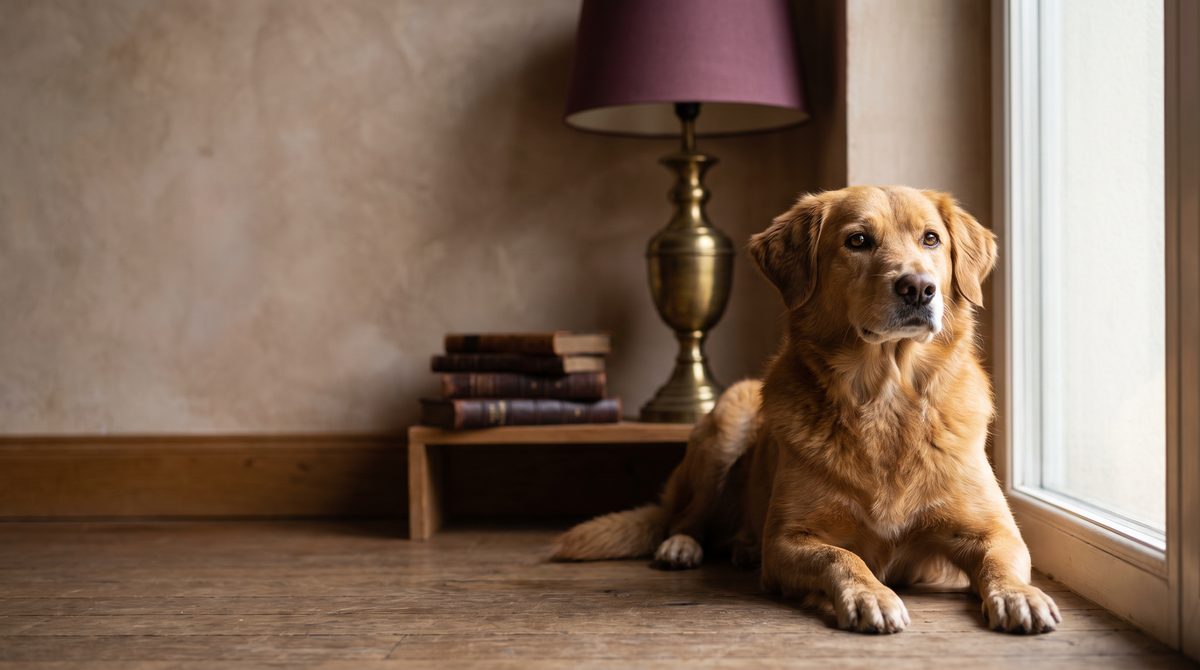
Every pet portrait from a photo starts with one choice: the picture you upload. You don't need a professional camera: a phone photo taken in the right light, at the right height, is usually all it takes. This guide talks mostly about dogs, but it works the same way for cats and other pets.
The best photo for a pet portrait
Check these points before you upload:
- Sharp eyes. The eyes make a face recognizable, so they're the part that most needs to be in focus.
- The whole face. Both eyes, both ears and the muzzle in the frame, nothing cut off at the edge.
- Eye level. A photo taken from above makes the head look big and the body small. Get down to your pet's height.
- Soft daylight from the side. Light from a window, off to one side, shows the shape of the face and the texture of the coat.
- No filters, no flash. Filters change coat colors, and the AI can only see what's in the photo. Flash flattens the face and can make the eyes glow.
- A good angle. Your pet looking at the camera, or turned three-quarters toward it.
- Your pet alone. No people in the frame, including hands and arms.
How to take a good photo of your dog
If the right picture doesn't exist yet, take it. Ten minutes is usually enough.
- Pick a bright spot near a window, with daylight coming from one side.
- Turn off the flash and any filters.
- Sit or kneel so your phone is at your dog's eye level.
- Hold a treat or a toy just above the lens so your dog looks toward the camera.
- Tap the screen on the eyes to focus there, then take several shots in a row.
- Keep the sharpest one, and upload the original file rather than a screenshot.
Dogs that won't sit still
Try after a long walk, when your dog is tired and calm. Ask a helper to stand behind you with a treat, so attention stays near the lens. Take plenty of shots: in a burst of twenty, one usually catches the eyes sharp and the head still.
Black fur and white fur
Black coats lose detail in dim rooms, so give them plenty of soft daylight and avoid a bright window behind the dog. White coats lose detail in strong sun, so look for open shade or an overcast day. A background with some contrast helps the outline: a light wall for a dark dog, a darker blanket for a white one.
Cats and other pets
Cats rarely pose on request. Wait for a calm moment on a sunny windowsill or a favorite chair, with your phone ready at their eye level. Other pets follow the same rules: sharp eyes, soft light, the whole face.
Old photos for a memorial portrait
If your pet has passed, you may only have older photos. That's fine: choose the one where the face is clearest, even if it isn't perfect. For a printed photo, scan it, or photograph it lying flat in daylight, without flash and without glare.
If your favorite shot includes a person, crop them out before uploading, as long as the short side keeps at least 600 pixels. When you mark the order as a memorial portrait, a person looks at each preview before we send it. That can take up to a day.
If the portrait is for a friend, our guide to gifts for someone who lost a dog has ideas to go with it, and our dog memorial quotes can help with the card.
Technical requirements: format, size and pixels
You can upload a JPG, PNG or WebP file of up to 15 MB. What matters most is the number of pixels on the photo's short side.
| Short side of the photo | What happens |
|---|---|
| Under 600 pixels | Too small to use: pick another photo |
| 600 to 999 pixels | Accepted, with a note: fine for the 12×16 in poster, but larger sizes need a sharper photo |
| 1,000 pixels or more | No warning, for any size |
Recent phone photos are well over 1,000 pixels. Trouble usually comes from screenshots, images saved from social media or photos sent through messaging apps, which shrink the file. If a friend took the photo, ask for the original. Your phone's photo details screen shows the dimensions.
Which style suits which photo
All four styles start from the same photo, but each one makes the most of something different.
| Style | What it looks like | Photos that suit it |
|---|---|---|
| Royal | Velvet, ermine and the light of a court portrait | A calm, upright pose, facing the camera or at three-quarters |
| Watercolor | Soft washes, light and airy | A gentle expression in soft, even light |
| Line | Clean lines and flat color, like a modern print | A clear outline against a plain background, distinct markings |
| Pop | Bold color and strong outlines, cheerful and graphic | An expressive face: a head tilt, a tongue out, ears up |
For a memorial portrait, a calm photo suits Royal or Watercolor. The goofy one might be just right for Pop.
Which size suits which photo
Every size includes shipping.
| Size | Material | Price |
|---|---|---|
| Poster 12×16 in | 200 gsm satin paper | $45 |
| Poster 20×28 in | 200 gsm satin paper | $69 |
| Canvas 12×16 in | Cotton-polyester on a 1.5 in (4 cm) wooden frame | $79 |
| Canvas 16×24 in | Cotton-polyester on a 1.5 in (4 cm) wooden frame | $109 |
If your photo has under 1,000 pixels on the short side, the 12×16 in poster is the safe choice. A sharper photo opens up every size. You can also add the high-resolution digital file for $19.
What AI can and can't do about likeness
Your portrait is generated by a Google AI model from the photo you upload, then printed on canvas or paper. It's a generated image, not handmade art. The AI tries to keep your pet's breed, colors, markings and features, but it can get details wrong or interpret them. A clear, well-lit photo leaves it less to guess.
Two things are never left to the AI. Our software sets the name on the nameplate in type, so it's spelled exactly as you entered it. And you choose: we print only the preview you approve. Our AI transparency page explains the details.
From photo to print: previews and approval
- Upload your photo, pick a style and a size, and add your pet's name for the nameplate if you like.
- At checkout your card is only authorized, not charged.
- Within minutes you get four previews. For memorial portraits, a person reviews them first, which can take up to a day.
- Approve the one you love, and only then is your card charged. If none is right, ask for a new set of four, up to two times, free.
- If none of them works, cancel and pay nothing. If you do nothing, the authorization expires on its own after 7 days.
Once you approve, your portrait is printed in the US in 2-5 business days, then travels with USPS or UPS for about 4-9 days. Our shipping page has the details.
Frequently asked questions
Can you make a pet portrait from any photo?
Almost any. It needs to be a JPG, PNG or WebP file up to 15 MB, with at least 600 pixels on the short side. It also can't include people. The sharper the photo and the clearer the face, the more the AI has to work with. Under 1,000 pixels, stick to the 12×16 in poster.
What is the best photo for a pet portrait?
A sharp photo taken at your pet's eye level, with the whole face visible and the eyes in focus. Soft daylight from one side works best. Your pet should be looking at the camera or turned three-quarters toward it, with no filters, no flash and no people in the frame.
Can I get a dog portrait from a photo with me in it?
The photo you upload shouldn't include people. If your favorite shot has you in it, crop yourself out on your phone first. Then check that the short side still has at least 600 pixels.
Does it work for cats and other pets?
Yes. The photo rules are the same for cats and other pets. You need a sharp, well-lit picture of the face, taken at eye level, with the animal alone. With cats, a calm moment in a favorite spot usually gives the best shot.
Is a custom pet portrait from Coat & Canvas made by hand?
No. Each custom pet portrait is generated with AI from your photo and then printed on canvas or poster paper. You see four previews first, and nothing is printed until you approve one.